Fridays post to the PenWorks of the Word blog tour is by a gentleman named Richard T. Hicks. To say that his story is miraculous is an understatement–very few fully recover from a diagnosis of chronic schizophrenia as he evidently has. You can find it here:
I’m running somewhat behind this week because of health concerns both for Hubby & me. I’ll try to do better next week, circumstances cooperating.
Tuesday’s PenWorks of the Word blog tour post is by an inspirational lady named Tracy Thorp. Her article is on Rachel, you know, of Rachel and Leah fame in Genesis. Tracy is a former trial lawyer and has a very different view of Rachel than most. You can read her post
16 I will lead the blind by ways they have not known, along unfamiliar paths I will guide them; I will turn the darkness into light before them and make the rough places smooth. These are the things I will do; I will not forsake them.
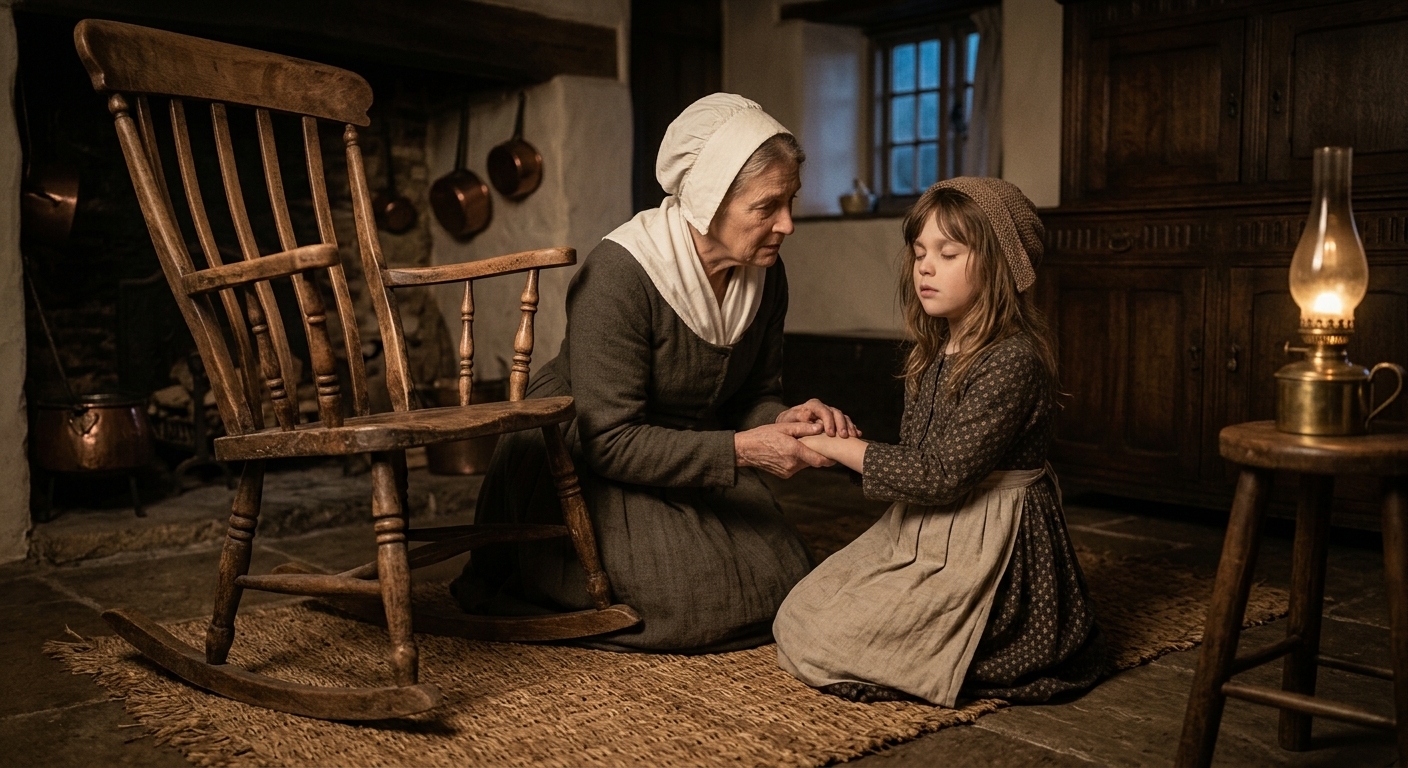
Six-year-old Frances knelt with her beloved grandmother beside the old lady’s rocking chair, praying earnestly for one thing—that she could go to school and learn like other children. Most children would find the request strange, as the refrain that echoes down the centuries is how tedious most kids find school. Frances literally ached for knowledge—she longed for it more than anything else–but she had a serious problem. She was blind.
It was 1826. The first school for the blind in the United States wouldn’t open until 1829. The now familiar reading system of dots, known as Braille, had been invented by a 15-year-old blind French lad 2 years previously, but it was just one of a hodgepodge of reading systems occupying the blindness education landscape at that time. In short, the prospects of Frances receiving an education were about as bright as those of people walking on the moon.
It wasn’t until one day in 1835, 9 long years after her prayer with her grandmother, that Frances’s mother sat down with her, a letter from the New York Institution for the blind in hand, inviting Frances to attend school there. Although she’d never been away from home for any length of time, Frances cheerfully accepted the challenge.
After completing her education, she got a job at her alma mater, teaching rhetoric and history. She even made history of her own, as she was the first woman ever to address a joint session of Congress. Indeed, she did it twice—once in 1844 and again in 1847, petitioning for establishment of schools for the blind in every state of the Union. She also worked tirelessly in support of various rescue missions.
Impressive as those accomplishments were, they’re not why this lady is remembered. Rather, she’s celebrated for her hymns, and it’s likely that any hymn book in the western world of a reasonable size will contain at least one she wrote. Indeed, she was so prolific that she used perhaps as many as 200 different pseudonyms, both male and female, so that the songs in the hymnbooks would not appear to all be by the same author. The little girl’s name was Fanny Crosby. Her most famous hymn is probably “Blessed Assurance”. The hymn from which this essay takes its title is another, and you could assuredly find others you know throughout the more than 8000 (you read that right—8000), hymns she has contributed to Christian hymnaries. The little blind girl who persevered in praying to be educated for 9 agonizing years showed God she was serious about it. She never gave up. She never quit believing, though the odds of her dream coming true were vanishingly small. Once she received her request, she lost no time putting the education for which she’d so fervently prayed to the service of both God and humanity.
Because composers of music got paid far more than did a lyricist, Fanny rarely got more than $2 per hymn. The vast majority of those proceeds went to support rescue missions. In truth, she never owned her own home, and she often lived in some of New York’s worst slums. But she left a legacy that’s endured for over a century. And I suspect she’s got one of the biggest mansions in Heaven. We, in turn, have been left with a musical heritage that would be vastly poorer without her and with the example of a life that shines brightly to help show us the way to The Way.
Lord, please help us daily to let your light shine through us. Help us draw inspiration from those we know and admire, as well as those we know only from afar. Help us understand with crystal clarity that we might be the only face of Jesus someone ever sees. Help us love more like You. Amen.
I guess either I didn’t see this when it was posted, or I got there too early. Either way, here are the opening remarks Matthew Elliott posted for his blog tour.
Today the PenWorks of the Word blog tour has officially launched! Matthew J. Elliott, its creator, has put together an impressive array of Christian authors (present company excluded though I’m nonetheless honored to be participating) and some exciting giveaway opportunities which will be presented at some point close to mid-blog-tour. This is his 2nd year doing this (& my 1st, so, as I said, I don’t really know what I’m doing). However, every Tuesday, Friday, and Sunday throughout October, various authors will be posting to the tour, and I will be sharing those posts which their authors have authorized to be posted on other sites. So guess what, readers? Treats are a-comin’, and you don’t have to listen to just little old me for the entire month! I hope you’ll all take the opportunity to read what these special folks have written, as well as to subscribe to their blogs or interact w/other of their social channels if it’s of interest. I’m so honored to have these special folks participating, and I hope you feel likewise. Please check back on Friday, Sunday, and Tuesday throughout the month to see what treats are in store. I truly believe you’ll be glad you did! And thank you, as ever and always, for reading.
This year, I’m doing something different. A friend of mine, Matthew J. Elliot, is beginning a blog tour on Oct. 1 and extending throughout the entire month. I have never done a blog tour before, so I have no idea whatever what I’m doing. However, as I always say, being a newby is everyone’s first step toward becoming an expert–or not. This is a Christian blog tour. Some of the the authors write Bible fiction. Others are pastors and other writers in the Christian space. I’ll be posting their material throughout the month here as well. Here’s the author lineup:
10/1 – Thursday – Opening Remarks – Matthew Elliott
10/2 – Friday – Shannon Skaer
10/4 – Sunday – Jackie McBride
10/6 – Tuesday – Tracey Thorp
10/9 – Friday – Richard Hicks
10/11 – Sunday – Sean Lyon
10/13 – Tuesday – Tracy Gimpel
10/14- Wednesday – Featured Review – Across the Lake by Barbara Britton
10/16 – Friday – April Gardner
10/18 – Sunday – Karen Lopez
10/20 – Tuesday – Demi Griffin
10/21- Wednesday – Barbara Britton
10/23 – Friday – Natasha Woodcraft
10/25 – Sunday – Marilyn T. Parker (Tentative)
10/27 – Tuesday – Anna Moore Bradfield
10/28- Featured Review – Judas Otherwise by Steven Marks
10/30 – Friday – Linda Matchett
10/31 – Saturday – Closing Remarks – Matthew Elliott
I hope everyone enjoys reading someone else’s thoughts besides mine for a change.
I’ve been praying the Lord’s prayer for many many years. Saturday morning as I was thinking about how to go about writing this post, I realized something. Jesus was praying in the pleural! He used words like ‘us’ and ‘we’ and ‘our’. I guess I glossed it over because who better than Jesus to use the “royal we?” But then I began to wonder to myself: might there be more to it than merely an editorial turn of phrase? I didn’t even know how to go about searching, so I asked Gemini, Google’s AI. I learned much to my surprise and delight, that our church fathers had been pondering this question long before I ever entered the world, particularly Cyprian and Augustine. Cyprian wrote what is perhaps the most famous early treatise on the subject, De Dominica Oratione (On the Lord’s Prayer). Writing during a period of intense persecution and internal Church division, he argued that Jesus intentionally designed the prayer to prevent self-centered individualism:
“Before all things, the Teacher of peace and the Master of unity would not have prayer to be made single and individually, as for one who prays for himself alone. For we do not say ‘My Father…’; nor does each one ask that only his own debt should be forgiven… Our prayer is public and common; and when we pray, we pray not for one but for the whole people, because we the whole people are one.” — Cyprian, Treatise 4.8
For Cyprian, the plural phrasing is a mandate for solidarity:
One Body, One Voice: He pointed to the three young men in the fiery furnace (Daniel 3) and the Apostles in the Upper Room as examples of praying “with one accord”.
Writing over a century later, Augustine picked up Cyprian’s torch in his Sermons on the New Testament, but he placed special emphasis on how the plural pronoun radically flattens human social hierarchies: “How great a condescension! This the emperor says, and this says the beggar: this says the slave, and this his lord. They say all together, ‘Our Father, which art in heaven.’ … You have begun to belong to a great family.” — Augustine, Sermon 8 & 9
For Augustine, the plural pronouns acted as a theological reset button:
Radical Equality: In Roman society—steeped in rigid class structures, slavery, and imperial privilege—forcing an emperor and a slave to use the exact same possessive pronoun (“our”) before the Creator was revolutionary.
No Private Monopolies: Augustine emphasized that no individual, regardless of rank or piety, can claim a private monopoly on God. By forcing every believer to say “us,” the prayer abolishes human pride.
Both Cyprian and Augustine concluded that when Jesus gave us this prayer, He didn’t just teach us what to ask for—He taught us who we are when we ask it: one indivisible body.
Who knew? Certainly not me.
The other thing is that in 1st century Judaism, prayer was communal. The Jewish sages argued that a purely singular prayer was spiritually vulnerable to self-centeredness or accusation, whereas a plural prayer carries the spiritual weight and merit of the whole community. Jesus’ model prayer aligns squarely with this core rabbinic principle.
When we pray the Lord’s Model prayer, therefore, we’re joining all Christians throughout the entire world in a prayer for all believers. “Give us our daily bread” is a petition that’s not answered if I’m full but someone else is hungry. “Forgive us our debts as we forgive our debtors” is a prayer that can’t be ansered if we ask forgiveness from God but hold a grudge against another–or won’t forgive ourselves.
Maybe if we thought more about this prayer, we’d realize that we really are all united in God–Father, Son, and Spirit.
Lord, thank you for the insight you gave that you weren’t just using the “royal we”, that you had a purpose for doing so, which was to unite all Christians w/you & w/each other. Help us look beyond our individualistic thoughts and find consolation that we are truly all brothers and sisters in your family. Amen.
Hello, and welcome to another blessing Sunday. Traveling with me on this path are Abbie Johnson Taylor and Lynda Lambert, who shared the idea with me.
This is the 4th part in my series on the Lord’s prayer, and today I’m going to talk about a subject I think most of us struggle with at one time or another–that of “unanswered prayers. And I’m going to propose a prayer that never fails.
The scripture reference is Matthew 9:10, part b–“Your will be done.”
I first learned about this particular prayer In Jan Karon’s Mitford series books, where an Episcopal priest named Father Tim Cavanaugh talks about it. It isn’t a long, eloquent list of requests. It’s just four simple words: “Thy will be done.” That prayer never fails because it completely shifts our posture from control to surrender. Think about human parenting. Our parents didn’t give us everything we wanted. Sometimes they were unable, but often it was because what we asked for simply wasn’t good for us. Parents who accede to a child’s every whim don’t produce healthy adults; they raise spoiled, entitled human beings. Giving in every time often reveals a lack of willingness to do the hard work of loving a child enough to say “no.” God is not a permissive parent. Because He is all-knowing, He knows what is right for us, even though we can’t see the full picture. A “no” or a period of silence doesn’t mean we did something wrong. As we look back on 9/11, that posture of surrender becomes even more critical. In the wake of immense national tragedy and unexplainable loss, transactional prayer leaves people broken and confused. But this isn’t just about massive historical events; it hits close to home for all of us. When I was twenty years old, I lost my mother to lung cancer, even though she didn’t smoke. My family and I prayed fervently for her to be healed, but it wasn’t to be. Decades later, I still have no idea why. I don’t believe God’s perfect will was necessarily done in that situation—we live in a broken world where terrible things happen that prevent earthly outcomes from being what we (and God) would wish. But I strongly maintain that her death was not caused by my lack of faith, nor by God’s lack of love. When we look at scripture, even Jesus prayed for things that—on the surface—appeared to go “unanswered.” During the Last Supper, He prayed deeply that His followers would be unified as one—yet a quick glance at the church today shows how far we are from that. Shortly after, in the Garden of Gethsemane, facing the cross, He prayed, “Father, if you are willing, take this cup from me; yet not my will, but yours be done.” The cup remained. The connection was perfect, the line was clear, and the answer was still a painful “no.” And it was the hardest thing Jesus’s loving Father ever had to do. If even Jesus surrendered His own desires to the Father’s overarching purpose, what makes us think we’re entitled to get everything on our personal wish list? I say all this because I struggle with it, too. It’s hard watching others get their visible breakthroughs while my requests seem to be profoundly ignored. But Gethsemane and our own personal heartbreaks prove that a “no” isn’t a penalty. The goal of picking up that tin can isn’t to dictate the outcome—it’s just to stay on the line, trusting in God’s love even when we don’t understand His timing or His answers. Prayer isn’t about making demands or seeking answers. It’s about sharing our heart with our dear Father, and then trusting the results to His infinite wisdom and love. Maybe the song “Unanswered Prayers” by Garth Brooks summarizes it best. https://www.youtube.com/watch?v=2dtopRtx0Co “This is the confidence we have in approaching God: that if we ask anything according to his will, he hears us.” — 1 John 5:14 Today and every day, Lord, may your will be done in my life.
This is the 3rd post in my series on the Lord’s prayer. Today I’m discussing the first part of Matthew 9:10 “Thy Kingdom Come”.
Every time I think about it, I think I have more questions than answers, but here’s what I’ve come up w/thus far. Next week it might change.
As far as I can tell, there are 3 ways that God’s kingdom can come:
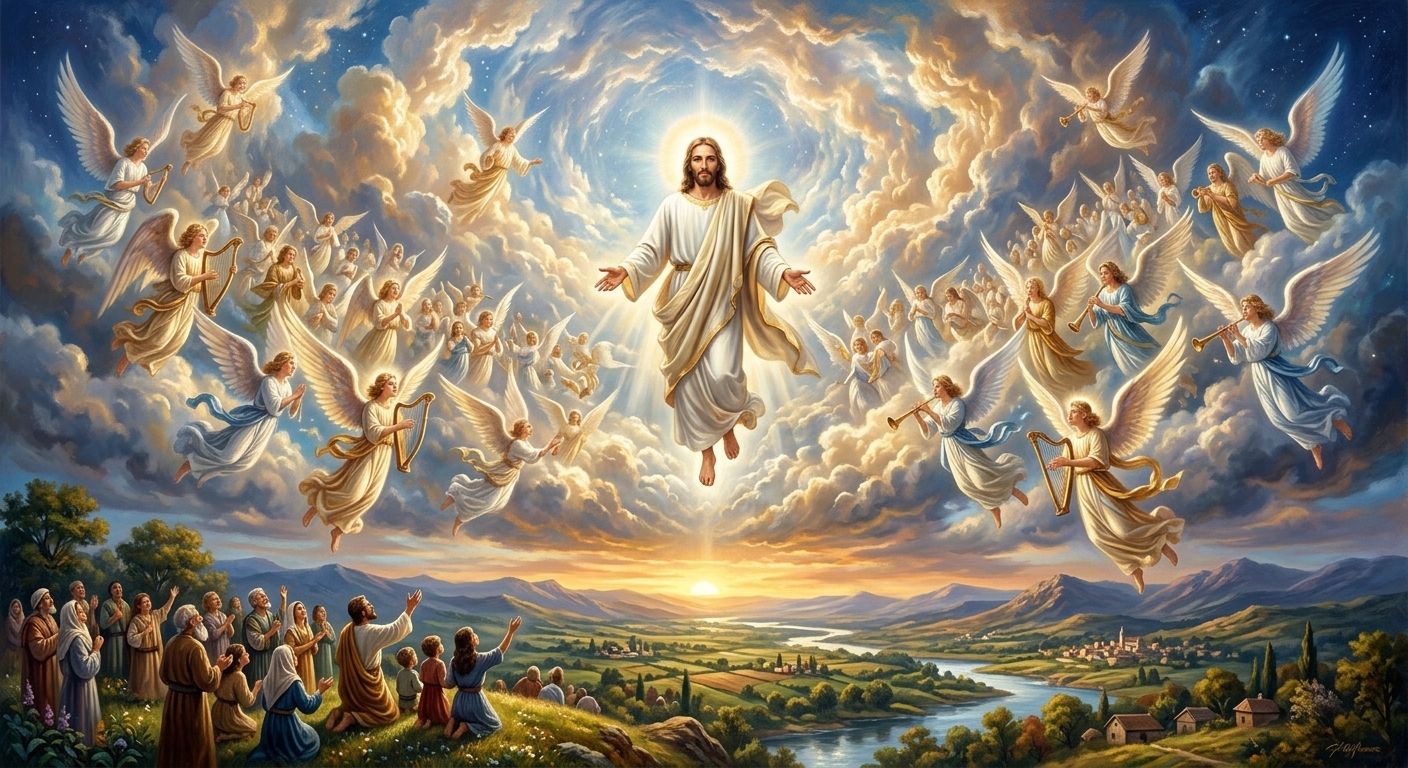
When He comes back, as depicted in the image above;
When He calls us home individually; and
When others who know God and do His will enter our lives.
I made reference to that last week when I wrote a tribute to Dolly Parton. She was a well-known example, but there are those who exemplify God’s love and care for others every single day.
Sometimes I think perhaps this life is like a proving ground. We’re given things to have dominion over because we’re told, after all, that we will be given things to rule over in Heaven. It’s one thing to be given dominion over a waiting room full of cooperative patients, submissive kids, and loving spouses. Unfortunately, sometimes what we visualize doesn’t exactly come to fruition in our real world.
And yet, somehow, it’s precisely in the midst of the chaos that reveals what God is making of us. Why God would be testing us for a heavenly reign I don’t really know, since there won’t be any unhappiness or chaos in heaven. Sill, with all dominion comes responsibility, and I think that’s what God’s looking for–how we’ll handle the responsibility of ruling with God.
I think we also need to shift our mindsets from ownership to stewardship. That’s not a word often used these days. It’s common to say our home or my car or my money. The truth is that everything we have–children, parents, spouses, siblings, possessions, pets, is on loan from the Father, and that loan can come due at any time. Our rule is temporary because our earthly lives are temporary. Only in heaven will our rule with the Father be permanent. Even there, however, we’re still stewards, because everything there is, was, or ever will be is our Heavenly Father’s. The key is to realize that and share with others what we have, because in doing so, we bring a bit of His kingdom down to earth.
Leviticus 25:23 says:
‘The land, moreover, shall not be sold permanently, for the land is Mine; for you are but aliens and sojourners with Me.
Lord, help us realize that you own all things, and that when we do what You would have us do, we bring some of Your Kingdom to Earth. In Jesus’s name, amen.