This month seems to have flown by. I’ve really enjoyed being on the PenWorks of the Word Blog Tour w/so many wonderful authors and even getting to know some of them a little better. It’s been an honor, a privilege, and a pleasure. By this time next week, it’ll be over. And I’m more than a little sad.
For the final Tuesday post of the tour, Anna Moore Bradfield offers “The Sponge and the Stick.” It was touching and it was hard reading all at once. See it
If you’re in need of some Christian reading material to warm up those cooler autumn nights, you’re in luck! Look for details starting Tuesday, Oct 13, 9:00 A.M. CST and sign up. I’m certain you’ll be glad you did!
16 I will lead the blind by ways they have not known, along unfamiliar paths I will guide them; I will turn the darkness into light before them and make the rough places smooth. These are the things I will do; I will not forsake them.
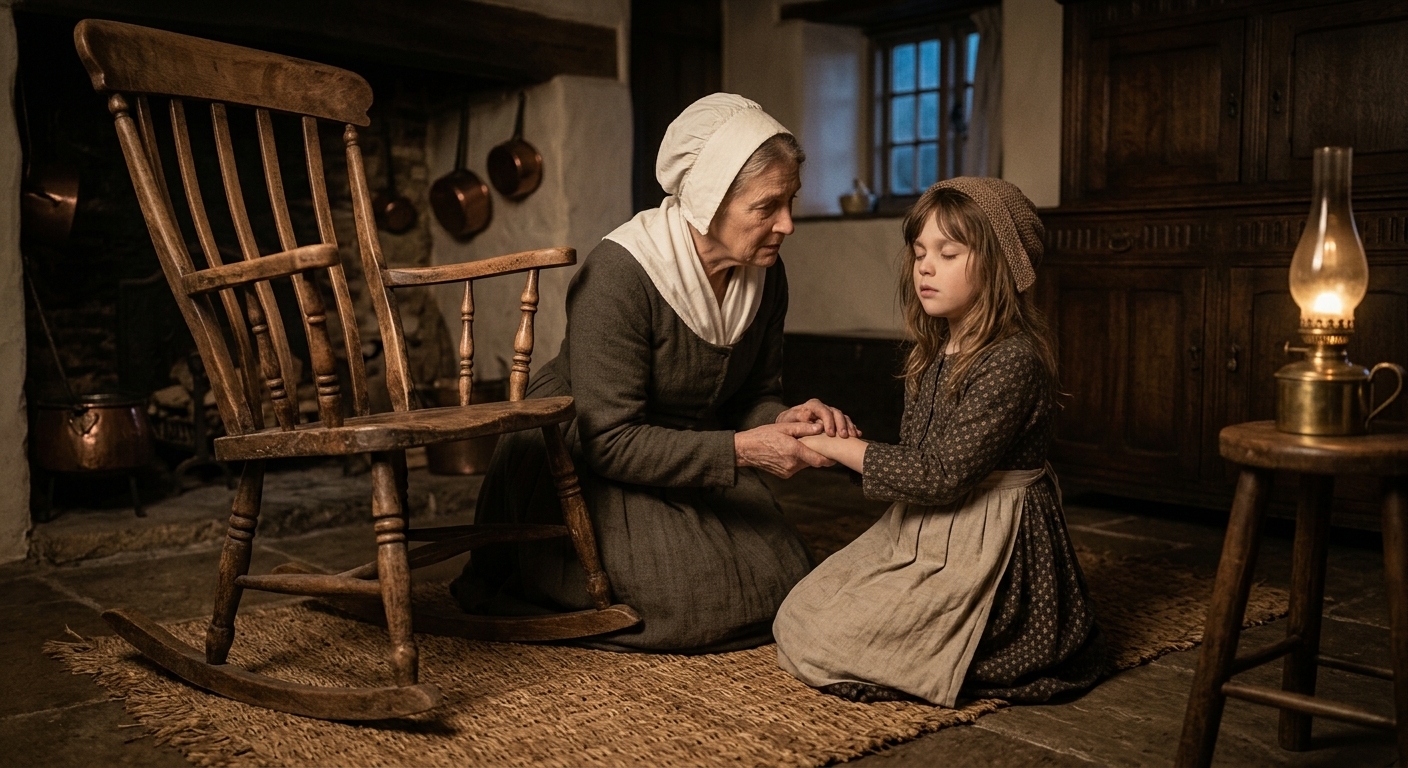
Six-year-old Frances knelt with her beloved grandmother beside the old lady’s rocking chair, praying earnestly for one thing—that she could go to school and learn like other children. Most children would find the request strange, as the refrain that echoes down the centuries is how tedious most kids find school. Frances literally ached for knowledge—she longed for it more than anything else–but she had a serious problem. She was blind.
It was 1826. The first school for the blind in the United States wouldn’t open until 1829. The now familiar reading system of dots, known as Braille, had been invented by a 15-year-old blind French lad 2 years previously, but it was just one of a hodgepodge of reading systems occupying the blindness education landscape at that time. In short, the prospects of Frances receiving an education were about as bright as those of people walking on the moon.
It wasn’t until one day in 1835, 9 long years after her prayer with her grandmother, that Frances’s mother sat down with her, a letter from the New York Institution for the blind in hand, inviting Frances to attend school there. Although she’d never been away from home for any length of time, Frances cheerfully accepted the challenge.
After completing her education, she got a job at her alma mater, teaching rhetoric and history. She even made history of her own, as she was the first woman ever to address a joint session of Congress. Indeed, she did it twice—once in 1844 and again in 1847, petitioning for establishment of schools for the blind in every state of the Union. She also worked tirelessly in support of various rescue missions.
Impressive as those accomplishments were, they’re not why this lady is remembered. Rather, she’s celebrated for her hymns, and it’s likely that any hymn book in the western world of a reasonable size will contain at least one she wrote. Indeed, she was so prolific that she used perhaps as many as 200 different pseudonyms, both male and female, so that the songs in the hymnbooks would not appear to all be by the same author. The little girl’s name was Fanny Crosby. Her most famous hymn is probably “Blessed Assurance”. The hymn from which this essay takes its title is another, and you could assuredly find others you know throughout the more than 8000 (you read that right—8000), hymns she has contributed to Christian hymnaries. The little blind girl who persevered in praying to be educated for 9 agonizing years showed God she was serious about it. She never gave up. She never quit believing, though the odds of her dream coming true were vanishingly small. Once she received her request, she lost no time putting the education for which she’d so fervently prayed to the service of both God and humanity.
Because composers of music got paid far more than did a lyricist, Fanny rarely got more than $2 per hymn. The vast majority of those proceeds went to support rescue missions. In truth, she never owned her own home, and she often lived in some of New York’s worst slums. But she left a legacy that’s endured for over a century. And I suspect she’s got one of the biggest mansions in Heaven. We, in turn, have been left with a musical heritage that would be vastly poorer without her and with the example of a life that shines brightly to help show us the way to The Way.
Lord, please help us daily to let your light shine through us. Help us draw inspiration from those we know and admire, as well as those we know only from afar. Help us understand with crystal clarity that we might be the only face of Jesus someone ever sees. Help us love more like You. Amen.
I guess either I didn’t see this when it was posted, or I got there too early. Either way, here are the opening remarks Matthew Elliott posted for his blog tour.
Today the PenWorks of the Word blog tour has officially launched! Matthew J. Elliott, its creator, has put together an impressive array of Christian authors (present company excluded though I’m nonetheless honored to be participating) and some exciting giveaway opportunities which will be presented at some point close to mid-blog-tour. This is his 2nd year doing this (& my 1st, so, as I said, I don’t really know what I’m doing). However, every Tuesday, Friday, and Sunday throughout October, various authors will be posting to the tour, and I will be sharing those posts which their authors have authorized to be posted on other sites. So guess what, readers? Treats are a-comin’, and you don’t have to listen to just little old me for the entire month! I hope you’ll all take the opportunity to read what these special folks have written, as well as to subscribe to their blogs or interact w/other of their social channels if it’s of interest. I’m so honored to have these special folks participating, and I hope you feel likewise. Please check back on Friday, Sunday, and Tuesday throughout the month to see what treats are in store. I truly believe you’ll be glad you did! And thank you, as ever and always, for reading.
This year, I’m doing something different. A friend of mine, Matthew J. Elliot, is beginning a blog tour on Oct. 1 and extending throughout the entire month. I have never done a blog tour before, so I have no idea whatever what I’m doing. However, as I always say, being a newby is everyone’s first step toward becoming an expert–or not. This is a Christian blog tour. Some of the the authors write Bible fiction. Others are pastors and other writers in the Christian space. I’ll be posting their material throughout the month here as well. Here’s the author lineup:
10/1 – Thursday – Opening Remarks – Matthew Elliott
10/2 – Friday – Shannon Skaer
10/4 – Sunday – Jackie McBride
10/6 – Tuesday – Tracey Thorp
10/9 – Friday – Richard Hicks
10/11 – Sunday – Sean Lyon
10/13 – Tuesday – Tracy Gimpel
10/14- Wednesday – Featured Review – Across the Lake by Barbara Britton
10/16 – Friday – April Gardner
10/18 – Sunday – Karen Lopez
10/20 – Tuesday – Demi Griffin
10/21- Wednesday – Barbara Britton
10/23 – Friday – Natasha Woodcraft
10/25 – Sunday – Marilyn T. Parker (Tentative)
10/27 – Tuesday – Anna Moore Bradfield
10/28- Featured Review – Judas Otherwise by Steven Marks
10/30 – Friday – Linda Matchett
10/31 – Saturday – Closing Remarks – Matthew Elliott
I hope everyone enjoys reading someone else’s thoughts besides mine for a change.
I’ve been praying the Lord’s prayer for many many years. Saturday morning as I was thinking about how to go about writing this post, I realized something. Jesus was praying in the pleural! He used words like ‘us’ and ‘we’ and ‘our’. I guess I glossed it over because who better than Jesus to use the “royal we?” But then I began to wonder to myself: might there be more to it than merely an editorial turn of phrase? I didn’t even know how to go about searching, so I asked Gemini, Google’s AI. I learned much to my surprise and delight, that our church fathers had been pondering this question long before I ever entered the world, particularly Cyprian and Augustine. Cyprian wrote what is perhaps the most famous early treatise on the subject, De Dominica Oratione (On the Lord’s Prayer). Writing during a period of intense persecution and internal Church division, he argued that Jesus intentionally designed the prayer to prevent self-centered individualism:
“Before all things, the Teacher of peace and the Master of unity would not have prayer to be made single and individually, as for one who prays for himself alone. For we do not say ‘My Father…’; nor does each one ask that only his own debt should be forgiven… Our prayer is public and common; and when we pray, we pray not for one but for the whole people, because we the whole people are one.” — Cyprian, Treatise 4.8
For Cyprian, the plural phrasing is a mandate for solidarity:
One Body, One Voice: He pointed to the three young men in the fiery furnace (Daniel 3) and the Apostles in the Upper Room as examples of praying “with one accord”.
Writing over a century later, Augustine picked up Cyprian’s torch in his Sermons on the New Testament, but he placed special emphasis on how the plural pronoun radically flattens human social hierarchies: “How great a condescension! This the emperor says, and this says the beggar: this says the slave, and this his lord. They say all together, ‘Our Father, which art in heaven.’ … You have begun to belong to a great family.” — Augustine, Sermon 8 & 9
For Augustine, the plural pronouns acted as a theological reset button:
Radical Equality: In Roman society—steeped in rigid class structures, slavery, and imperial privilege—forcing an emperor and a slave to use the exact same possessive pronoun (“our”) before the Creator was revolutionary.
No Private Monopolies: Augustine emphasized that no individual, regardless of rank or piety, can claim a private monopoly on God. By forcing every believer to say “us,” the prayer abolishes human pride.
Both Cyprian and Augustine concluded that when Jesus gave us this prayer, He didn’t just teach us what to ask for—He taught us who we are when we ask it: one indivisible body.
Who knew? Certainly not me.
The other thing is that in 1st century Judaism, prayer was communal. The Jewish sages argued that a purely singular prayer was spiritually vulnerable to self-centeredness or accusation, whereas a plural prayer carries the spiritual weight and merit of the whole community. Jesus’ model prayer aligns squarely with this core rabbinic principle.
When we pray the Lord’s Model prayer, therefore, we’re joining all Christians throughout the entire world in a prayer for all believers. “Give us our daily bread” is a petition that’s not answered if I’m full but someone else is hungry. “Forgive us our debts as we forgive our debtors” is a prayer that can’t be ansered if we ask forgiveness from God but hold a grudge against another–or won’t forgive ourselves.
Maybe if we thought more about this prayer, we’d realize that we really are all united in God–Father, Son, and Spirit.
Lord, thank you for the insight you gave that you weren’t just using the “royal we”, that you had a purpose for doing so, which was to unite all Christians w/you & w/each other. Help us look beyond our individualistic thoughts and find consolation that we are truly all brothers and sisters in your family. Amen.
This is the fifth part in my series on the Lord’s prayer, Matt 6:9-13. I’m concentrating on v. 11 “Give us today our daily bread.”
Many of us in developed nations have no idea what it means to be hungry. Seems rather foolish, doesn’t it, to be asking for daily bread when there’s practically a grocery store or fast food restaurant on every corner. It’s like get your butt out of your seat, out the door, & get what you need.
But behind closed doors, even in developed nations, hunger is a daily reality for some. Even more so in developing countries, where it’s often a lifelong nightmare.
Even in developed countries, though, this prayer is applicable. Maybe we don’t really need to ask God for our food, but I think daily bread applies to other areas of life. How often do we think about “how am I gonna do this or that?” or “how am I gonna be able to do x or y?” Maybe it’s get a job. Maybe it’s cope with devastating tragedy or health problems. Maybe it truly is coping with not having life’s necessities. This part of the Lord’s prayer reminds us that His provision occurs daily, sometimes just in the nick of time. God’s with us. He is our father, and he cares for us abundantly beyond all that we think or ask. He will provide. Maybe not on our timeframe, maybe not giving us everything we ask for, but He will give us what we need. God tells us to ask Him even though He already knows what it is we want and require.
It’s often tempting to think that we provide things for ourselves, that we earn it through our work or our cunning or our looks. But the reality is it’s all from God.
God gives us so many things–mountain vistas, azure oceans, ploomed musicians, family, friends, knowledge, and so much more that the blessings are innumerable. But it’s still good to remind ourselves daily that it’s God who provides for our every need.
Heavenly Father, make our hearts grateful and humble enough to accept your provision for our lives. But also give us the desire to be Your hands and feet in helping to show Your provision to others. In Jesus’s name, amen.