

Lessons on the Resurrection I Learned from a Turtle
Hello, and welcome to another blessing Sunday. Traveling with me on this path are
Lynda Lambert
who shared the idea with me.
Easter is less than a month away now. This time of year, my thoughts always drift toward the cross–& then, even more importantly, the resurrection. It’s one thing to read about the Resurrection in the Bible. It’s another thing to feel it. This is a story about something that happened over 40 years ago (REALLY???) that helped me do just that.
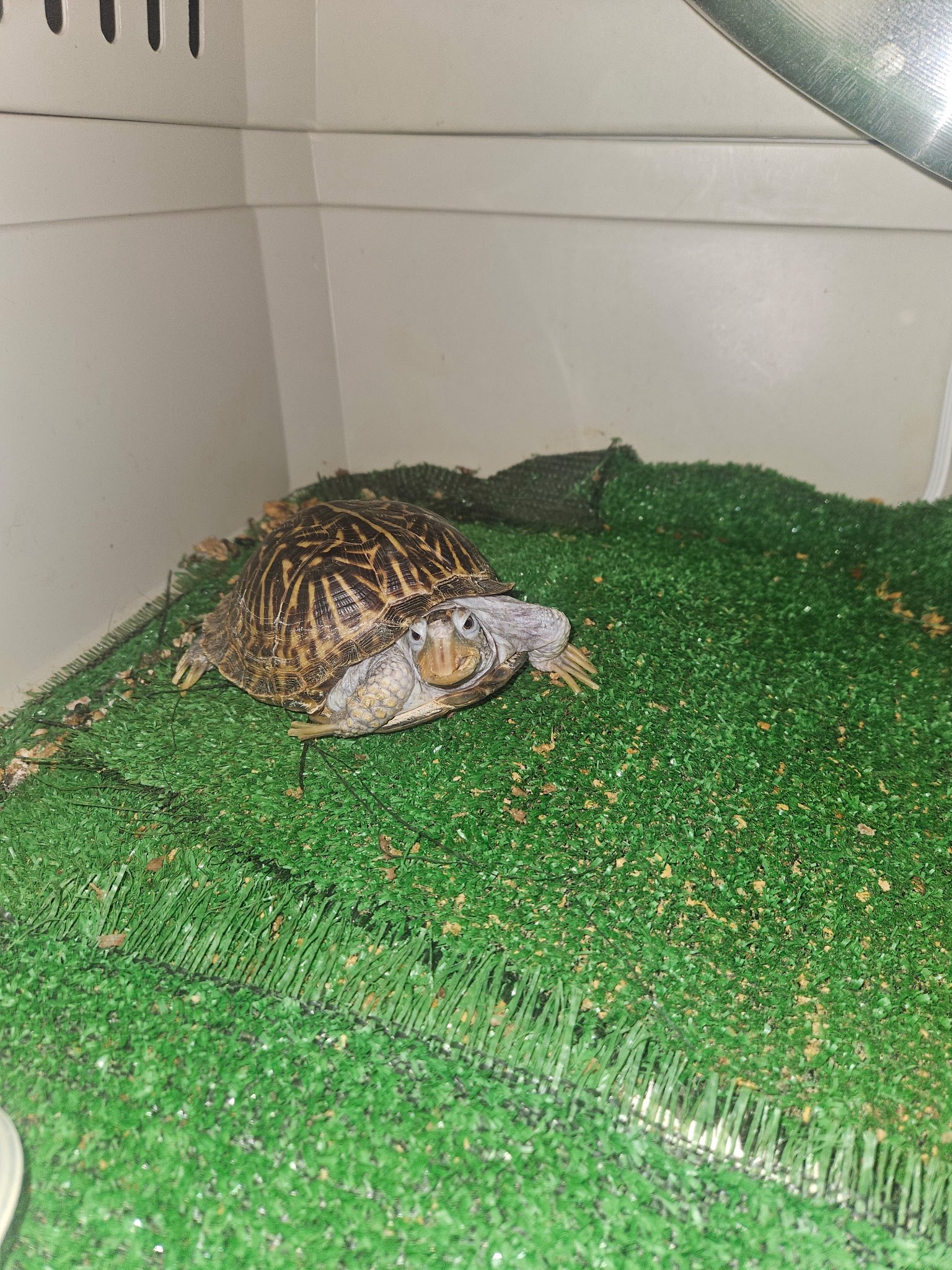
In August of 1993, my husband was about to enter seminary at Texas Christian University Bryte Divinity School in order to fulfill his dream of becoming a hospital chaplain. To be able to afford that, we had to move to Fort Worth and live in student housing. Our daughter had to leave her friends in Irving. We also had to part with our cat as Bryte housing had a very strict “no pets” policy. The transition was proving difficult.
Thus it was that shortly after moving in, Karl and I found ourselves advocating (begging and groveling)? before Barb, the head of student housing to allow daughter Amanda to have a pet turtle. I have no idea whether the argument regarding the difficult transition or, “even if the turtle got out, how much trouble could it actually cause?” was the deciding factor, but Barb, albeit somewhat reluctantly, agreed to grant our request.
Although we could ill afford to do so, we were in the Pets Mart shortly after Labor Day hunting the perfect shelled companion. We found one whose eyes looked clear, the shell was hard, and who was making its wishes to escape its enclosure known. The shorter tail led us to believe it was a female. The pet store clerk warned us that she might refuse to eat once we got her home, because of new surroundings, but, in fact, that proved to be a non-issue.
She’d crawl toward us and stand up in her enclosure when she wanted food. When we let her out, she’d often come to us and let us pick her up. She also seemed to enjoy exploring the apartment. But we learned very quickly that when she didn’t want to be found, she was queen of the art of hiding. Heidi seemed like the only appropriate name for her. And as time went on, though we never thought it possible, we grew to love Ms. Heidi turtle.
Trouble in paradise started in November. Her eyes became swollen. She wheezed when she breathed. She stopped eating. We took her to a vet who prescribed vitamins and antibiotics, which had to be injected at home. Despite being ill, the strength she demonstrated fighting her injections was surprisingly Herculean. It’s not a characteristic that readily comes to mind when thinking about a turtle, but when this turtle decided she didn’t want to do something, we quickly learned to be prepared for a monumental struggle. During one particularly fraught episode, Karl evidently hit her sciatic nerve, which caused her to hiss loudly and let go a smell that sent Amanda and I choking, holding our noses, and fleeing, while hapless Karl sat there holding the equally hapless tortoise.
On Thanksgiving Day we fed her some sweet potatoes, as the vet said the vitamin A would help. Shortly after, she threw them up, and Karl yelled in horror as he realized the vomited sweet potatoes were moving. The next day we were able to get a vet appointment to de worm her.
We were hoping that she’d kick the respiratory infection and start eating after that, but it was proving to be tougher than anyone anticipated. Round after round of antibiotics and antihistamines followed, which resulted in only slight and temporary improvements.
Tragedy struck in January 1994. Karl’s twin brother was hospitalized with lung cancer for the final time. Karl had to fly to Rhode Island to be with him and make final arrangements. Kip died on Jan 31, and Karl returned home shortly thereafter. Heidi held her own while he was gone, but seemed to just give up once he came back.
The last vet we went to said he was unable to do anything more for Heidi. When we requested a referral, he suggested Dr. Kendric, who served the Fort Worth zoo part time as one of their herpetologists.
We called and made an appointment for Feb 10. We were immediately impressed. Not only was he a veritable fountain of knowledge, but he actually, like us, loved turtles! He’d had a pet tortoise that died while he was in vet school. He said it broke his heart. He took blood, and we made an appointment for Valentine’s day, as he was sure he’d have the results by then. Because Karl had an exam that day, I went alone. The lab report was not good. Heidi was in liver failure. The worms, the drugs, the confinement and poor nutrition at the pet shop had likely all contributed. The inevitable had arrived. I had to tell him we couldn’t afford this.
I was shocked when he asked if we would allow him to bury her on his land.
“I’ll go one better than that,” I replied. “If you think you can help her, then please do so, and you can keep her as your pet.”
“You’d let me do that?” His voice was a mixture of joy and surprise.
“Only give me your word you won’t let her suffer,” I said. He assured me I had that.
“I’ll be in touch,” he said as I was leaving. I thanked him. It felt empty to be going home without Heidi. In just 6 months, she’d found her way into both our home and our hearts.
I’m a doctor. I know about liver failure. It’s bad in humans. It had to be worse for animals, just because of the dearth of treatment options. Neither Karl nor I were optimistic about Heidi’s chances.
As days went by, I increasingly assumed that Heidi was dead, and that Dr. Kendrick simply didn’t have the time or desire to call and convey the bad news. More than once I picked up the phone to call and inquire, but I couldn’t bring myself to do it. I had, after all, basically surrendered her. I really didn’t have the right.
It was St. Patrick’s day when the phone rang. We were just sitting down to dinner. I was nearest to it, so I answered.
“This is Dr. Kendrick over at Richland Hills Animal Clinic. I want to know if you’d like to come pick up Heidi.”
For a moment I was speechless. “But our agreement was that you’d keep her,” was all I could say. “We can’t afford to pay you.”
“And you will not attempt to do so. The only reason Heidi survived was because of the love you showed her. I want to restore her back to you. I’ve been practicing awhile now. I haven’t seen anyone as passionate about a turtle as yall. She belongs with you, unless you don’t feel you can do that.”
Karl and I both agreed we could absolutely do that, and he went to the clinic next day to pick up Heidi. The staff said she did something she’d never done before while she was at the clinic. When she heard Karl’s voice, she stuck her neck as far out of her shell as she could.
I got a glimpse then about how the disciples must have felt at Christ’s resurrection. Words couldn’t describe the joy. Having her back with us doing all the little things she’d done previously mended a whole in our family. Death did not have the last word. Life and love could still triumph.
Easter meant a great deal to me that year, and it has every year since. Heidi is the grand dam of our animal companions and still climbs the gate of her cage when she wants food or an excursion. She still struggles mightily when she doesn’t want us to do something for her. And she still occasionally sticks her neck out to be petted. The account of Scripture told me what happened that Easter day. A female Ornate Western Box Turtle taught me how it felt. And I will always remember a veterinarian who, despite eating the charges for a month of services, put compassion before money, donned his fighting spirit, looked death in the eye, and said “not today.”
In the final analysis, resurrection is simply God’s way of letting us know that hope, faith, and love never die. I’m reminded of that each time I walk past her cage.
Comments
Lessons on the Resurrection I Learned from a Turtle — No Comments
HTML tags allowed in your comment: <a href="" title=""> <abbr title=""> <acronym title=""> <b> <blockquote cite=""> <cite> <code> <del datetime=""> <em> <i> <q cite=""> <s> <strike> <strong>